FLUXBUS HOMOPHONIE – POLYPHONIE
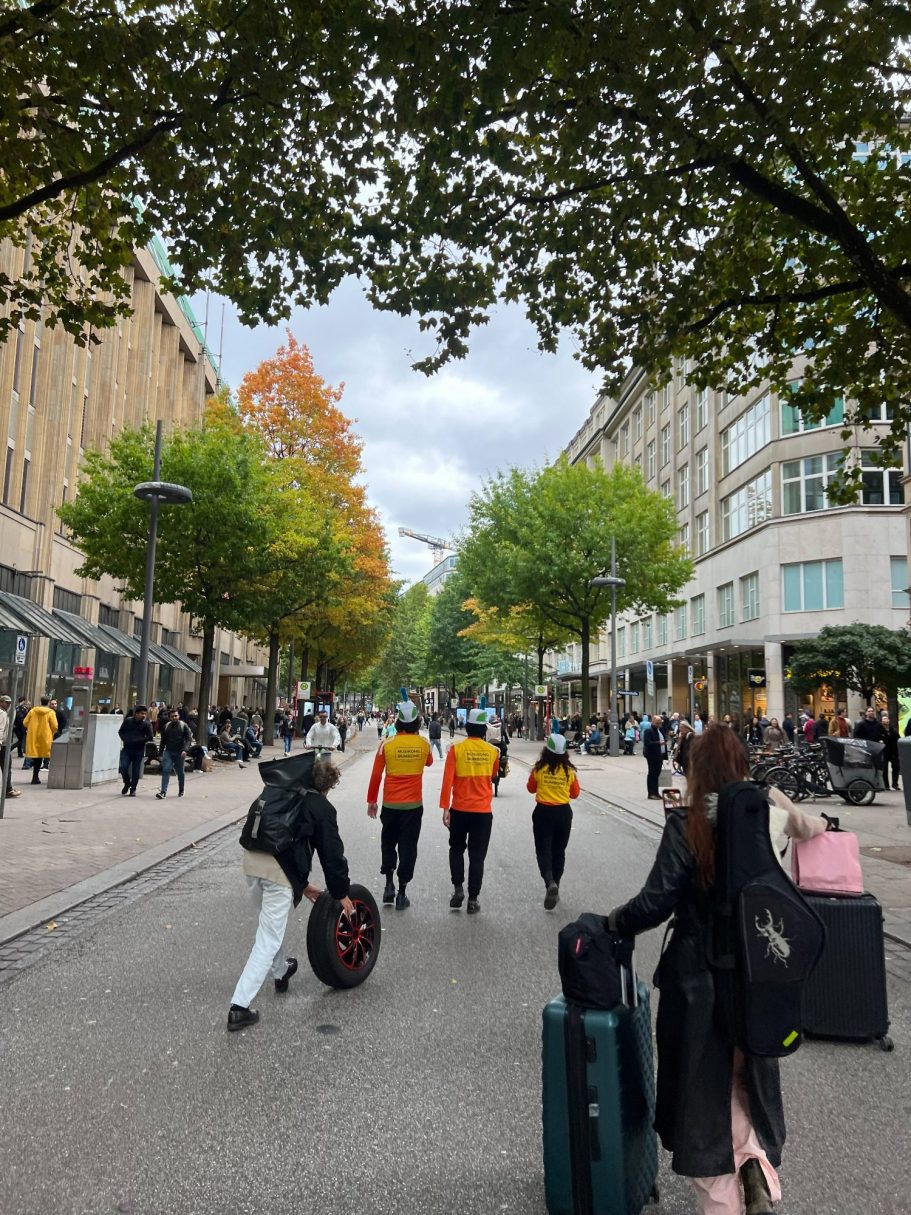
((NYT)) at Philippistraße 7 in Berlin and Westwerk at Admiralitätsstraße 74 in Hamburg. The FluxBus exhibition project takes place at these locations as well as along the 281-km stretch in between: 14 artists from both cities present their works simultaneously for one day in Berlin and Hamburg, respectively, before the works are transported by Flixbus to the other exhibition venue to be exhibited there as well. The exhibitions at ((NYT)) and Westwerk are themed “Homophony/Polyphony” and explore sonic, linguistic, and social communication. Along the way, the exhibited works leave their “safe space,” the White Cube, and are exposed to the unpredictable: Seven artists and 13 invited exhibition visitors ride along on each bus, while the remaining passengers (the company’s buses have between 49 and 80 seats) suddenly become the exhibition’s audience. While the initiated experience the artworks in a new context, they are new to the other passengers and become starting points for spontaneous interactions and chance encounters. Similar to the Fluxus movement that emerged in the 1960s (fluxus, Latin for “flowing,” “changeable”), the boundaries between art and everyday life blur, and the audience and its reactions become an essential part of the project.
Flixbus - which is also, unbeknownst to it, part of the project - plays an ambivalent role here: Founded in 2012, this travel and tech company offers comparatively sustainable and affordable trips both domestically and abroad, yet it is aggressively capitalistic in its orientation and, with a 95% market share (2023), has long held a monopoly. Verena Brakonier’s adaptation of the work LEBENSLAUF/CV refers to this, for example. Where are you from? Do you travel by bus out of conviction or out of necessity? And what does your mobility reveal about your life story? These are some of the questions Brakonier hopes to explore in conversation with travelers. Drawing on her own upbringing as the child of working-class parents and engaging with the audience, the artist raises questions about equal opportunity and background.
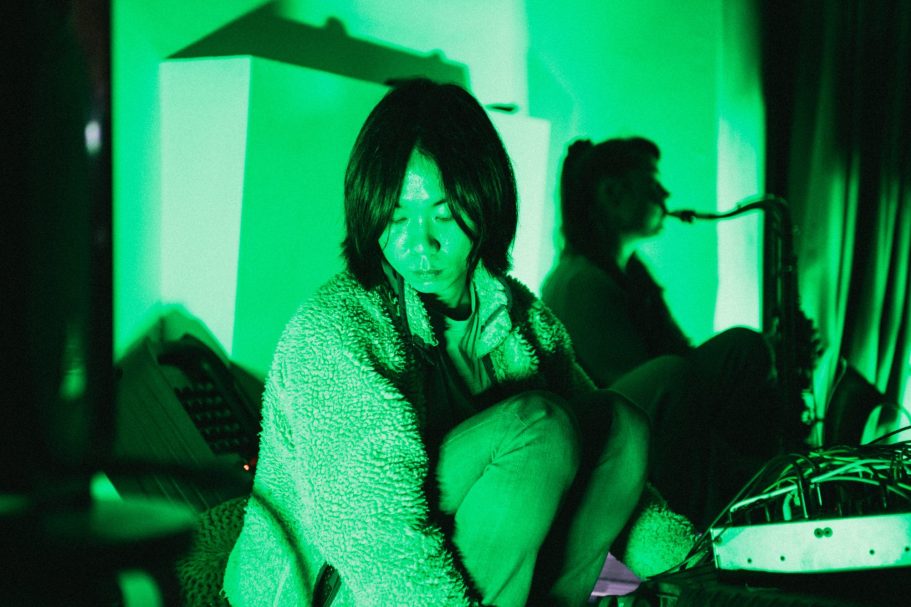
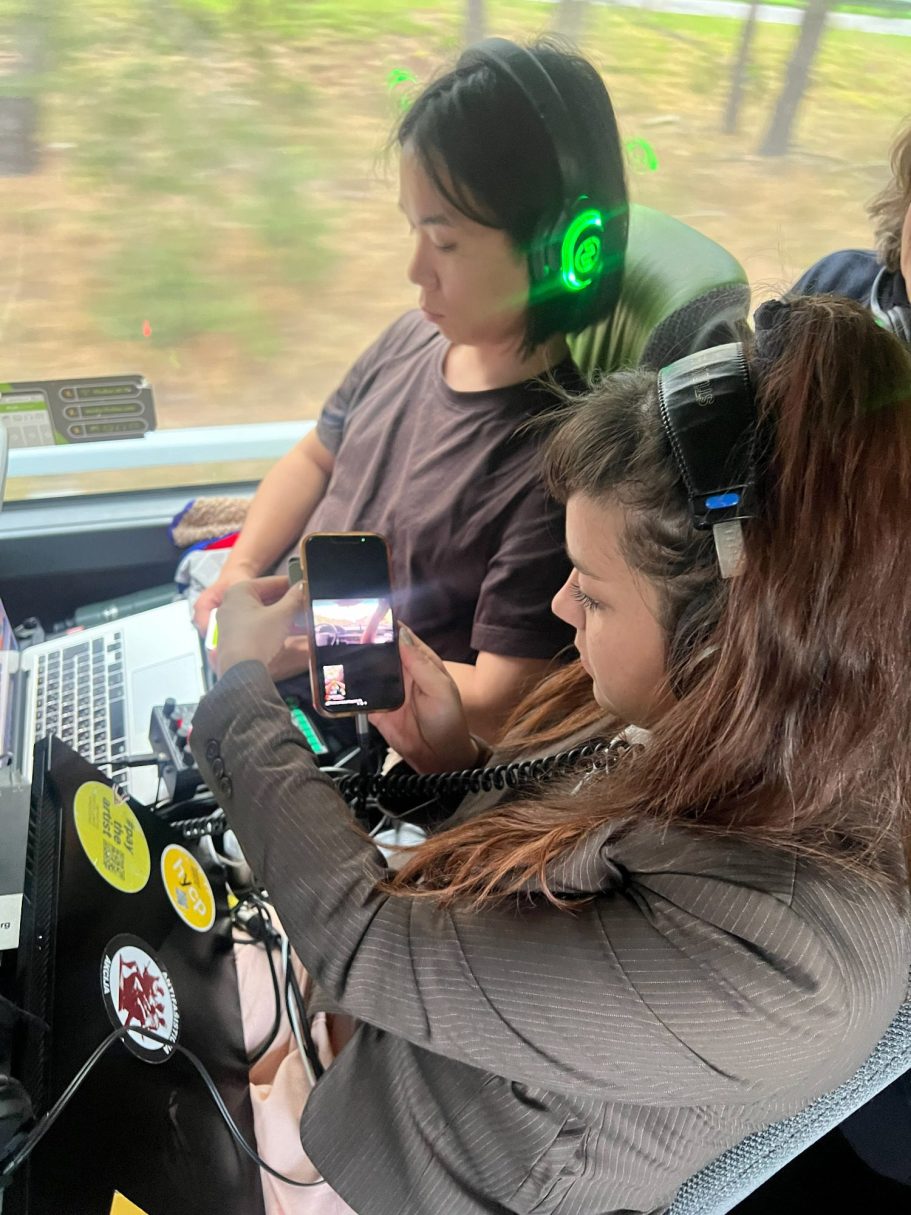
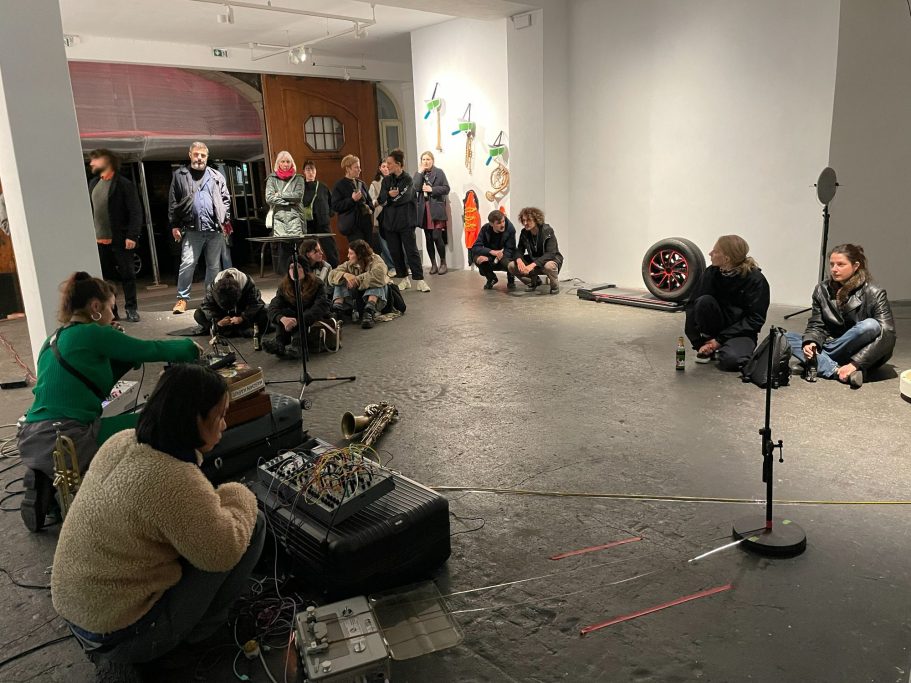
While the bus in LEBENSLAUF/CV serves as a starting point for examining structural discrimination, the sound duo Fngr Fuia (Sophia Leitenmayer & Junya Fujita) transforms it into an audiovisual mixing console in their work TRANSIT ECHOES: In their performances - which take place sequentially, first at Westwerk, then on the bus, and finally at ((NYT)) - the artists work with sounds recorded live from the immediate surroundings. Sounds from outside are transported into the interior, where they are mixed with the noises and music occurring there. The resulting sound ultimately flows into the next performance: The sound of the performance at the Westwerk is part of the performance on the bus, which in turn can be heard at ((NYT)). This creates a simultaneity of sounds (and places) that intensifies with each performance.
Signe Raunkjær Holm takes on the role of tour guide; instead of sights and historical facts about the city, the focus here is on intimacy, closeness, and distance. And the consulting company Logistique, represented by Sally Dalgaard, will transport a Hamburg fly to Berlin, thereby granting it an exclusive vacation - an experience normally denied to flies due to their short lifespan and their tendency to fly in circles. The project reflects on themes such as globalization and logistics, as well as the potential of artistic work to shape a new place.
With works by
Mette Bjørndal, Verena Brakonier, Sally Dalgaard, Lorenz Goldstein, Dörte Habighorst, Jori Kehn, Nikita Kotliar, Sophia Leitenmayer & Junya Fujita, Lee Mc Donald, Julia Nordholz, Signe Raunkjær Holm, Szerafina Schiesser, Sabine Siegfried, Heiko Wommelsdorf
Concerts and Performances
Die Maßnahme, Fngr Fuia, Musikong Bumbong, Renas Selim, Alina Anfruienko
Supported by Hamburg Cultural Foundation, Hamburg Department of Culture and Media
Text: Szerafina Schiesser, Lorenz Goldstein
Photos: ((NYT)) Tobias Textor, Flixbus Jori Kehn, Westwerk Birgit Dunkel