
Exorbitant
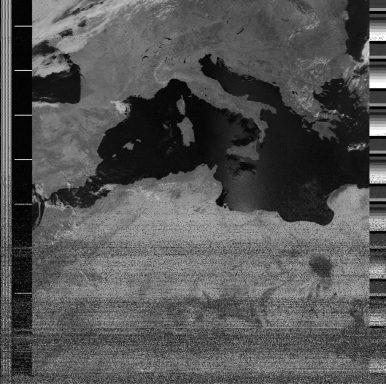
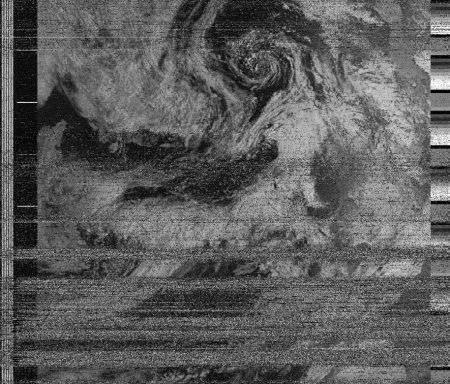
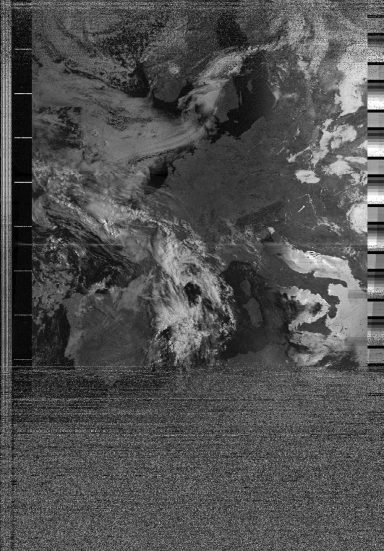
EXORBITANTE is a multimedia installation developed by Sophia Leitenmayer and Carlos León Zambrano that explores the end of analog transmission of meteorological images and the transformation of the NOAA satellites NOAA-15, NOAA-18, and NOAA-19 into space debris.
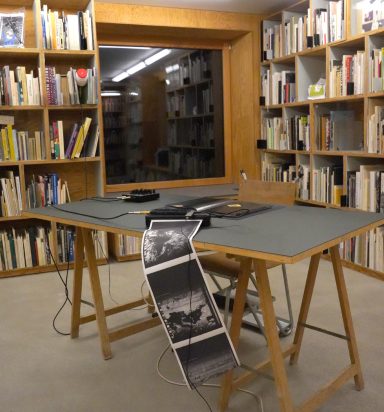
The project was created during a residency at the Andreas Züst Library (Switzerland), coinciding with the final decommissioning of these satellites in 2025. During this period, their final signals were received and recorded. Based on satellite signals and frequencies, field recordings, and research on weather phenomena, the radio frequency spectrum, and abandoned orbits, the project reflects on the lass of public observation and communication infrastructures and speculates on the relocation and scrapping of these satellites into graveyard orbit.
The term "exorbitant" derives from the Latin *exorbitare*:
to deviate from orbit, to leave the prescribed path. The project imagines space debris as a system of slow, uncontrolled collisions between objects-remnants of materials orbiting Earth that can trigger chain reactions with ecological, technical, political, and social
consequences.
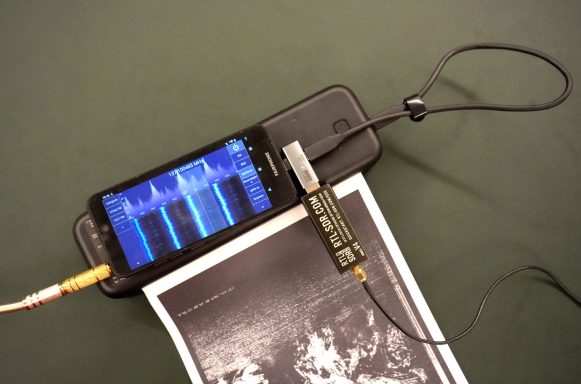
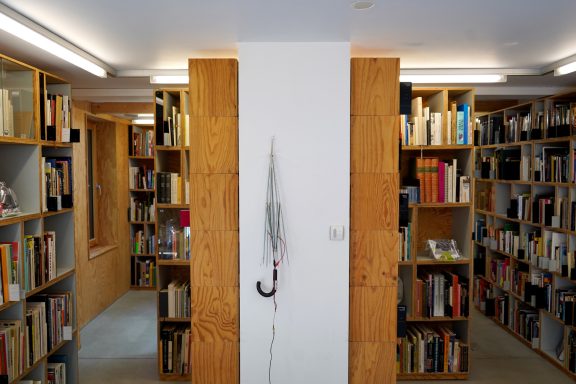
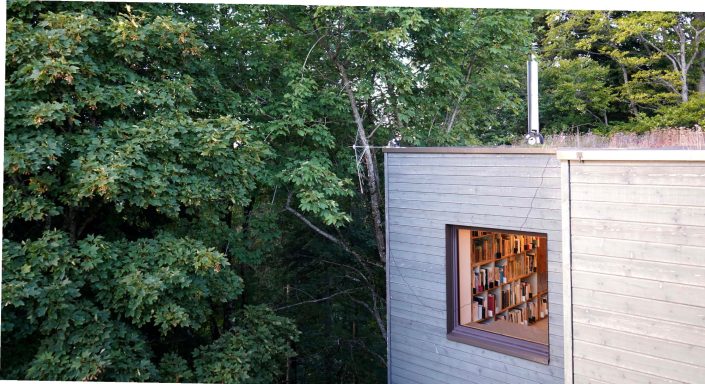
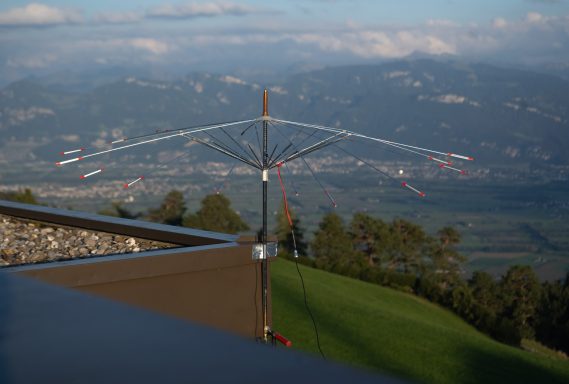
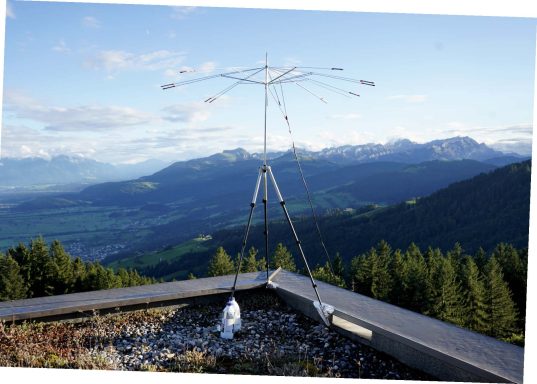
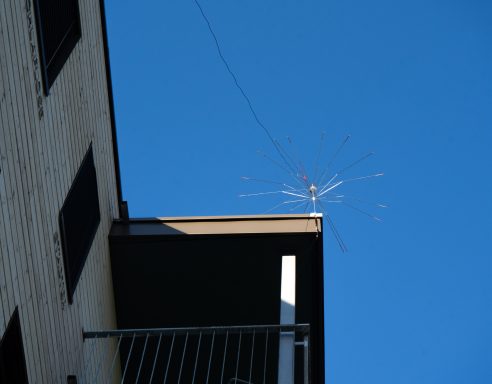
The public space of the Andreas Züst Library was interpreted as an observatory, weather station, and radio station and brought to life through homemade umbrella antennas. These antennas were strategically placed on the library's roof and operated using opensource
software and amateur radio receivers.
The function of these antennas is to receive signals from NOAA (National Oceanic and Atmospheric Administration) satellites, whose primary mission is to monitor the Earth, the atmosphere, the oceans, and the land surface. Their data (visual and acoustic) are used for weather forecasting, climate research, the observation of natural
phenomena, and scientific purposes. Installation: "Exorbitante" consists of a multichannel Ambisonics
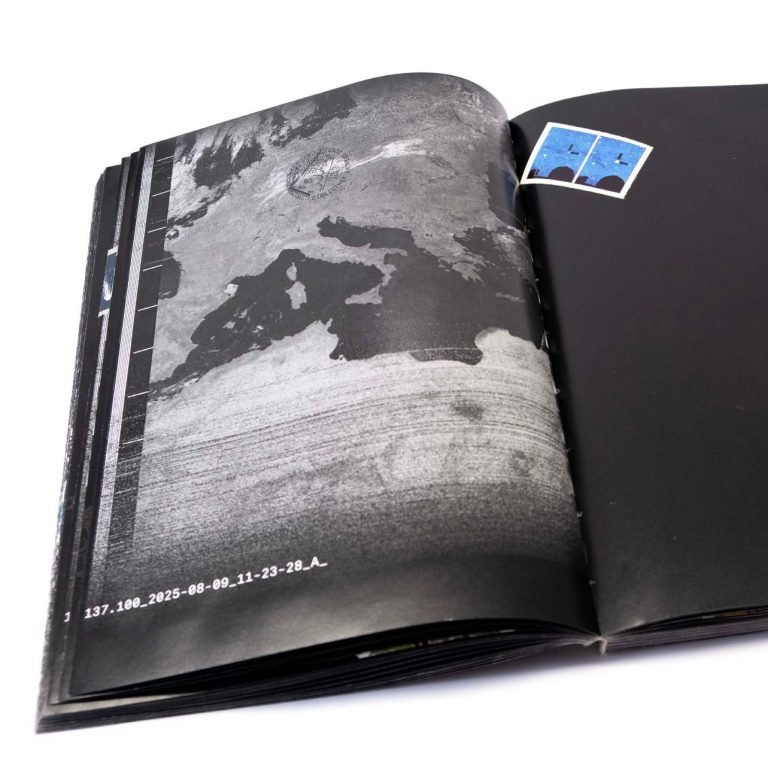
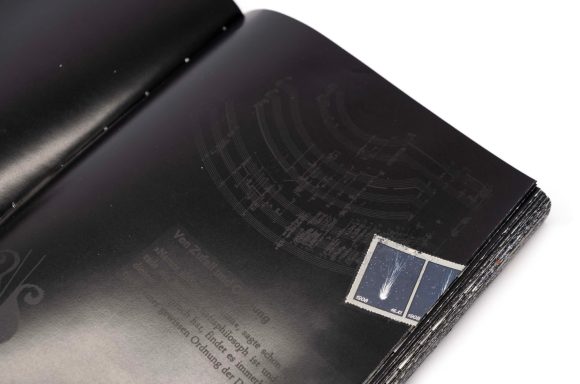
sound installation (full spherical surround sound) in the form of speaker objects, a sound composition, umbrella antennas, vacuum objects, and a book.
The sound installation, consisting of 16 object speakers, creates a dialogue between visual and acoustic content (frequencies between signals) and plays a three-dimensional sound composition, also dedicated to outer space: the slow and rapid chain reaction, the chaos in a vacuum, and the ambivalence between hope, humor, and
catastrophe.
The physical experience of intense melancholic emptiness and an atmospheric sensation of vacuum overlap with deep, hypnotic vibrations and frequencies, creating a spatial, cinematic soundscape.
A space in which waves and materials intersect, generating fictional echoes and spatial temporalities - a floating orchestra.
The umbrella antennas appear in the installation in a fragmented manner, stripped of their original function.
The choice of analog formats responds to the end of analog transmission of meteorological images: the conclusion of one technical system is translated into another material medium.
The project asks what happens to this abandoned frequency spectrum: which signals remain, how they overlap, and what new forms they take on.
The antennas function as an extension of the human ear into space and propose a speculative listening to orbital chain reactions.
Finally, the composition brings together decoded satellite images from the 42 days of the residency and content from the Andreas Züst Library, connecting the intersections between prehistoric elements, geology, meteorology, literature, art, technology, film, science fiction, magic, astronomy, and extraterrestrials.
The sound is interpreted as a piece of the spatial universe: a space with no beginning and no end, in which the sounds are layering, moving freely within the format and gradually colliding with one another, thereby creating a symbolic spatial narrative and an audible sense of disorientation, confusion, numbness, lass of control, and
emptiness. These excerpts are understood as fragments of information that travel, float, and linger throughout the entire format. There is no beginning and no end - listeners are already in orbit. With a touch of humor, the content is dedicated to the successes and failures of human history, portraying Homo sapiens as an arrogant predator seeking to conquer and colonize everything.
Text+Photos: Sophia Leitenmayer & Carlos León Zambrano, August 2025