„Autotune (Sound Branding System / Petroacoustics)“
With “Autotune (Sound Branding System / Petroacoustics)”, Sophia Leitenmayer has created a large-scale sound installation that explores the acoustic and emotional dimensions of modern mobility. The work takes as its starting point the specific sonic languages of automobiles, trucks, and ships - those sounds that shape our everyday environment and, at the same time, express technological, economic, and cultural notions of movement, progress, and identity.
Leitenmayer understands these soundscapes as forms of “sound branding” that go far beyond functional signals. Engine noises, vibrations, and technical resonances become carriers of emotions and social attributions that convey certain notions of freedom, performance, safety, or status. In “Autotune,” however, these sound-political strategies are not affirmed but rather deliberately shifted and affectively deconstructed. For vehicles that no longer exist, the artist generates artificial emotions, thereby creating an acoustic simulation of a time beyond the fossil fuel era.
The installation navigates the space between memory, speculation, and fiction, opening up a space in which the sonic legacies of petrochemical mobility can be experienced as an echo of a possible post-era.
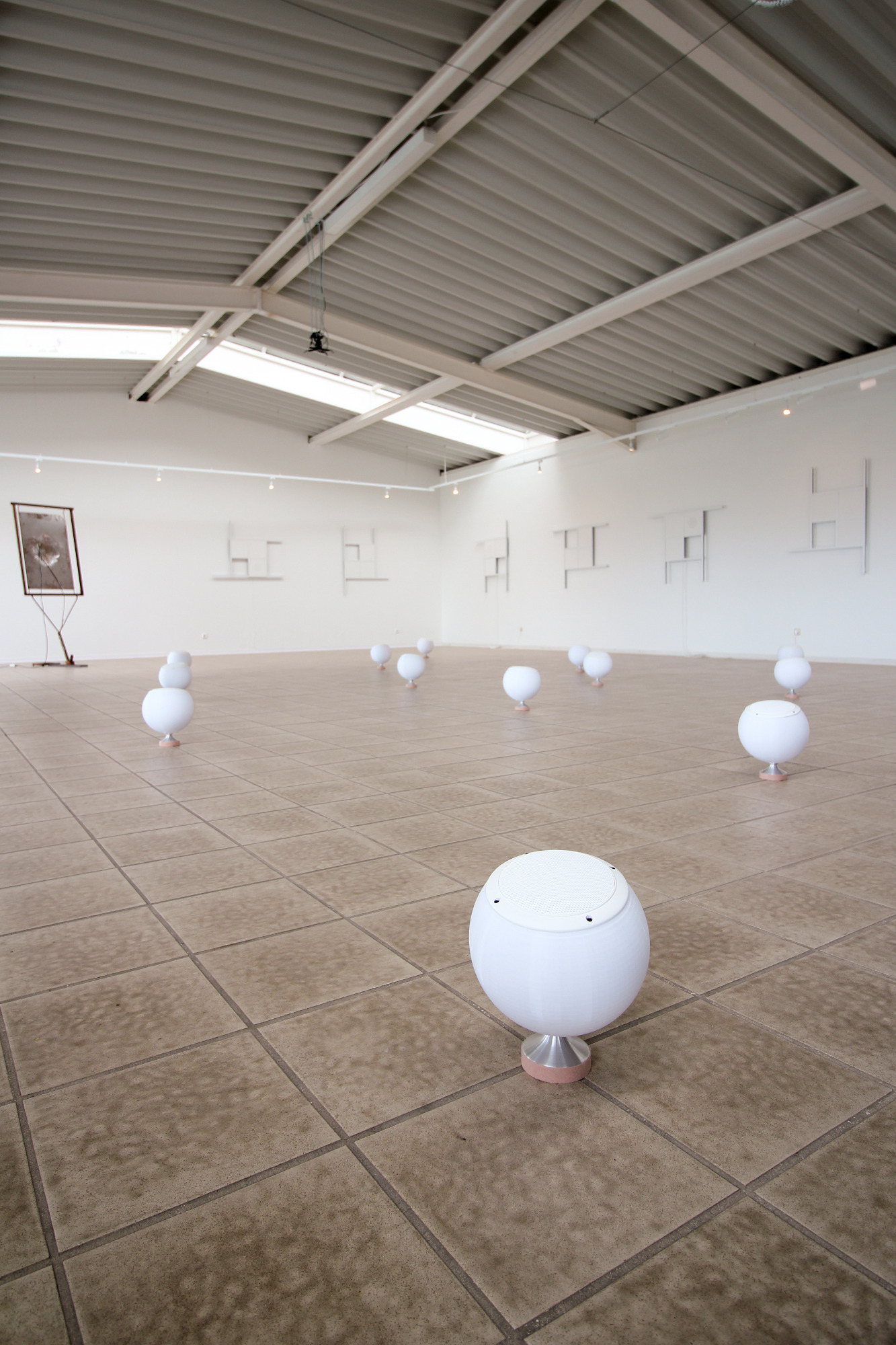
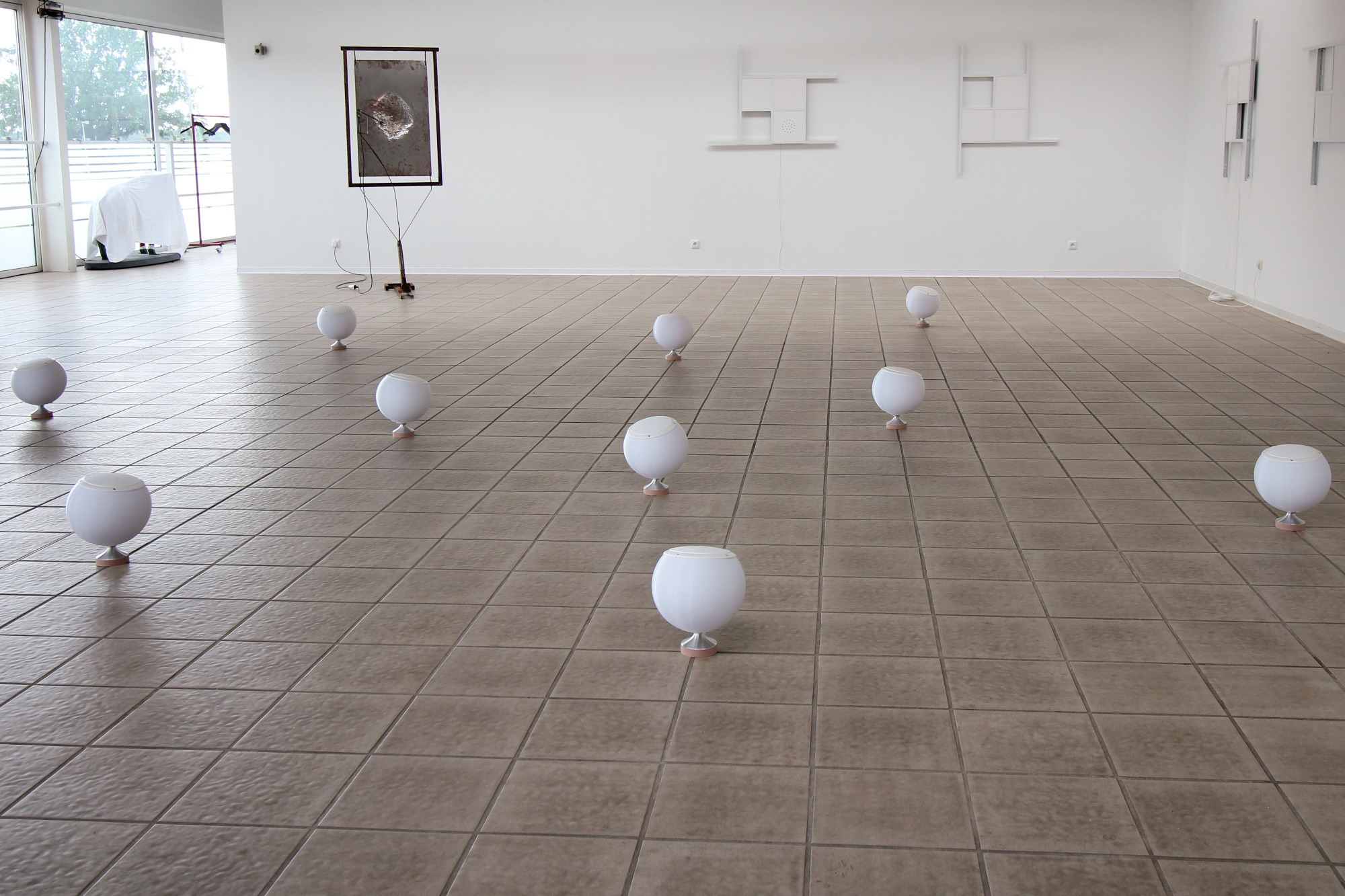
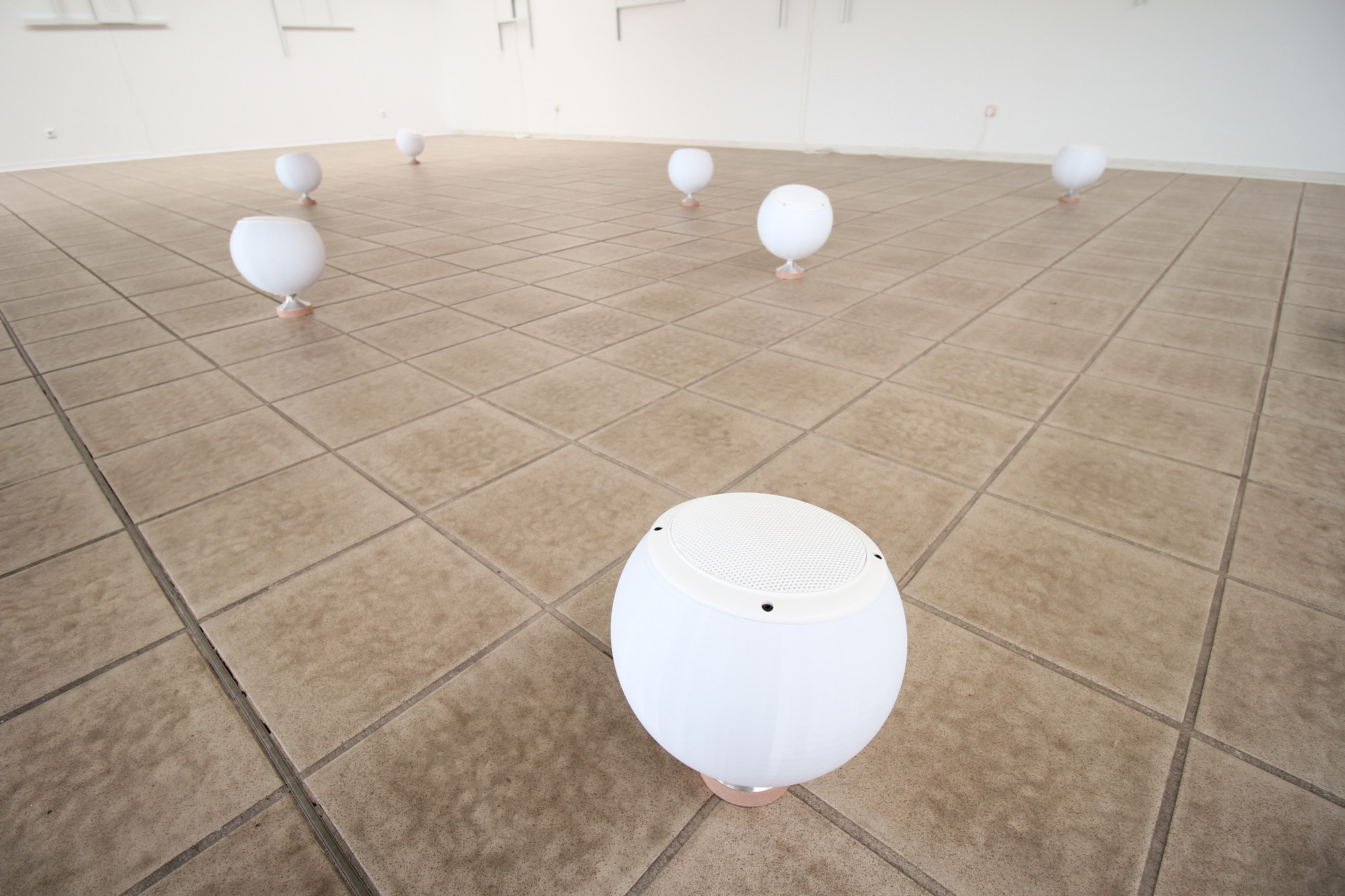
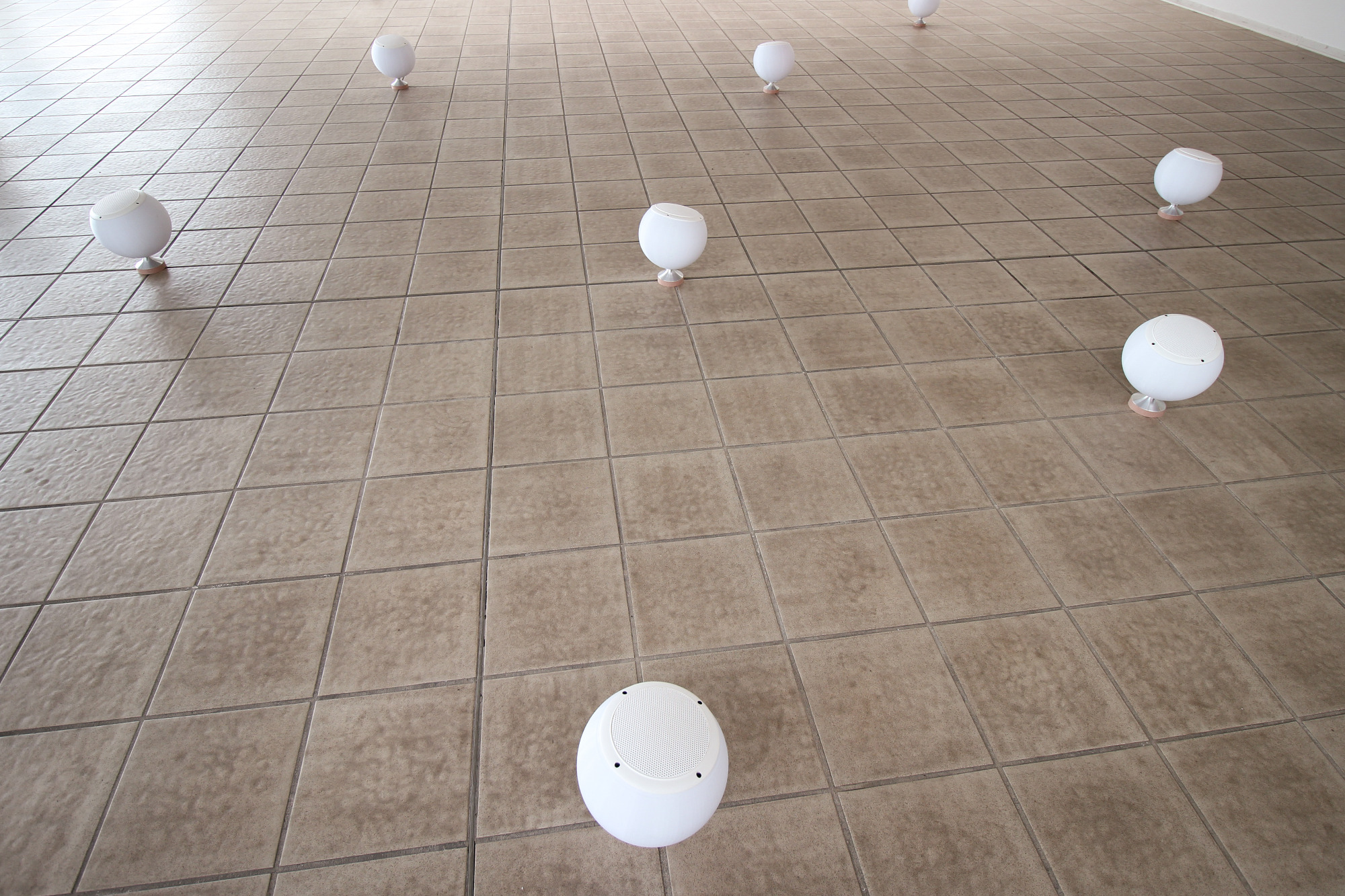
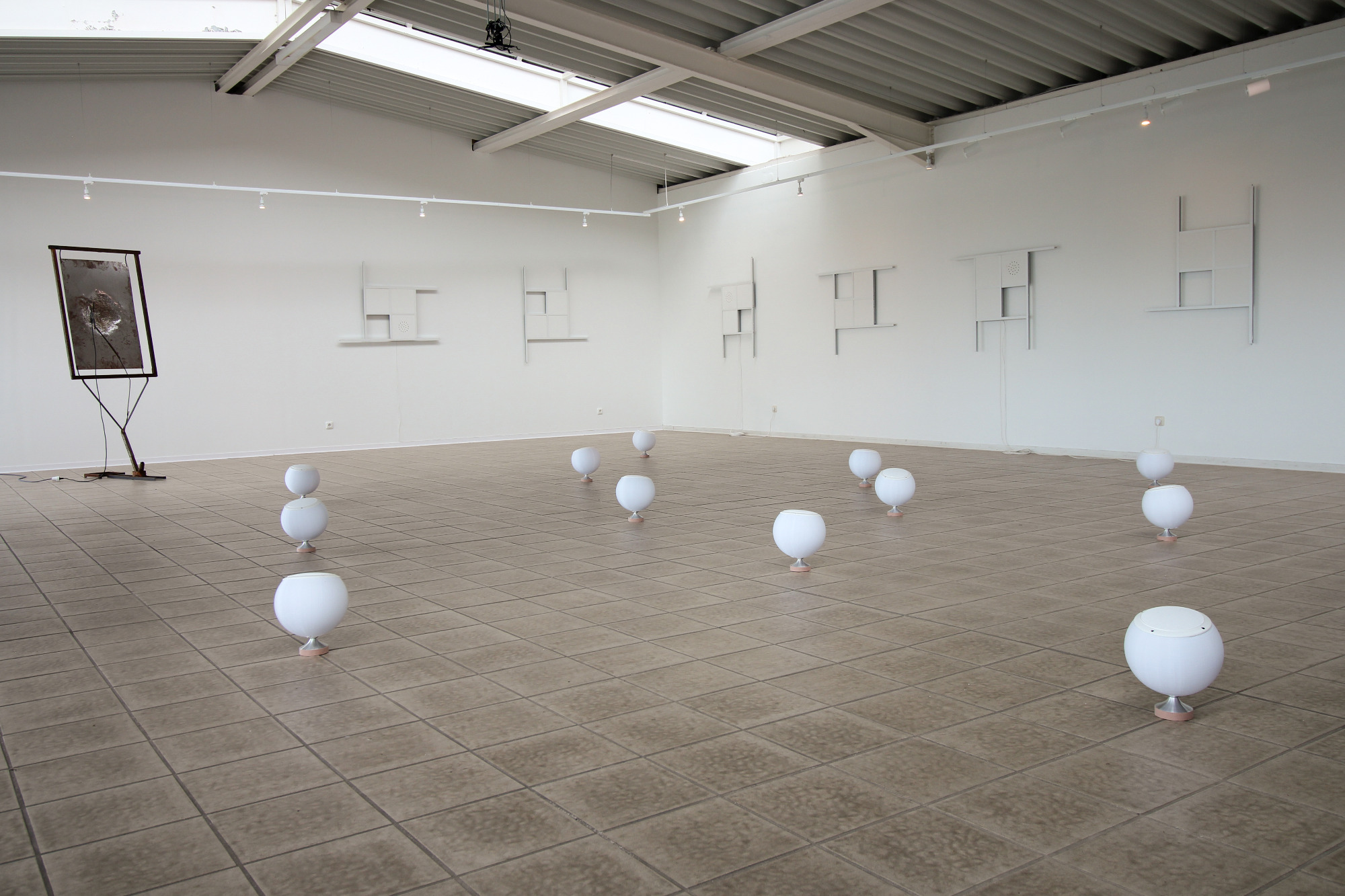
At the heart of the work is a 16-channel Ambisonics system consisting of speakers mounted on tenor saxophone mutes.
While the speaker chassis are industrially manufactured components, the artist produced the outer enclosures as individual sculptural 3D printed elements. The combination of digital fabrication, technical functionality, and spatial staging gives the speaker system a distinct aesthetic presence. The speakers do not appear as neutral playback devices, but rather as part of a complex sound structure whose technical infrastructure becomes visible without fully revealing itself.
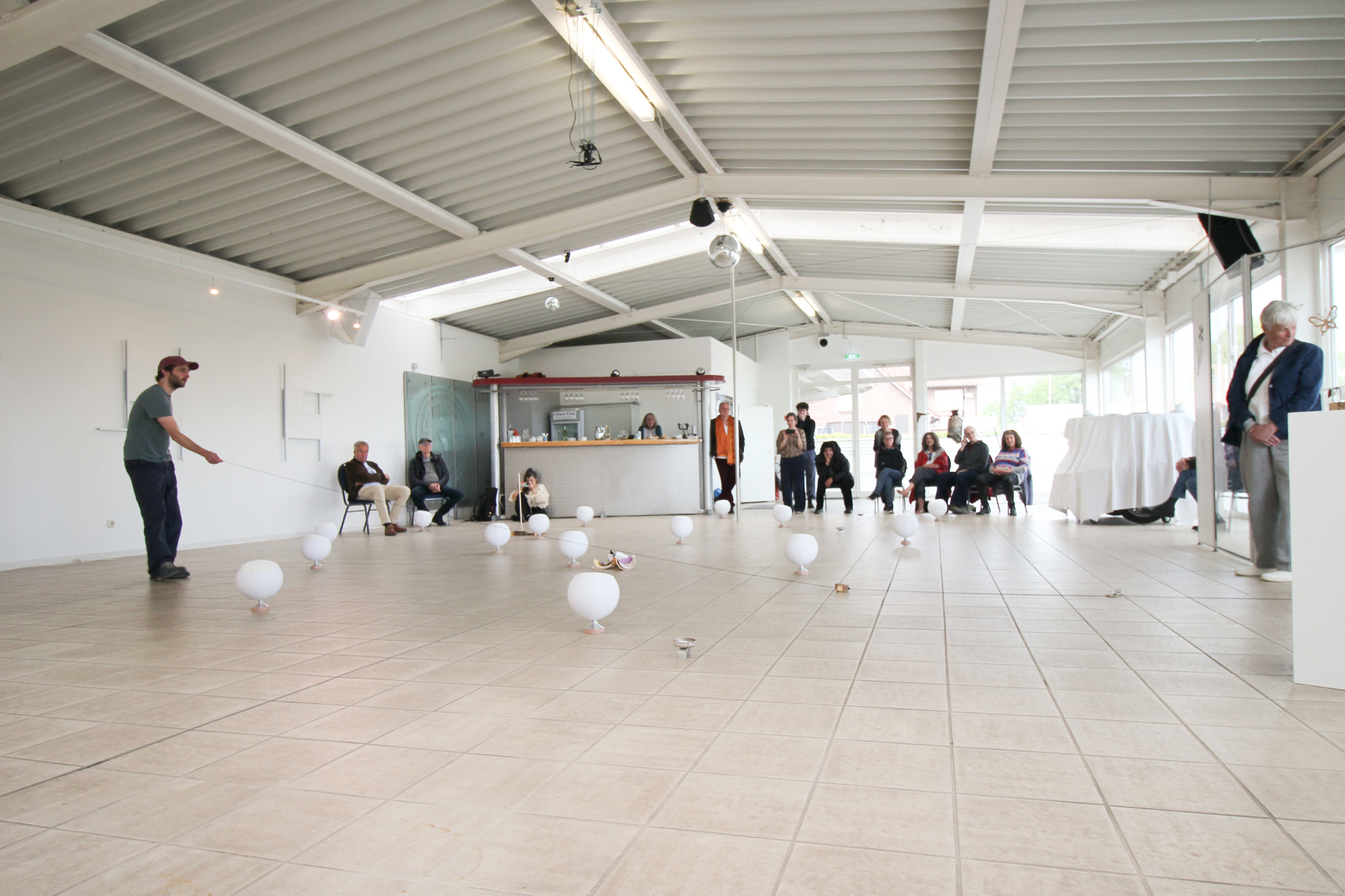
Each of the speakers also has its own integrated wireless receiver. The individual sound sources are controlled via a computer-controlled system, allowing for the near-complete elimination of visible cabling. As a result, the speakers appear as autonomous objects in the space, acting independently of one another while remaining part of a larger network. The technical construction does not recede into the background but becomes an essential component of the work, alluding to the invisible communication and control systems that also shape contemporary mobility and infrastructure networks.
The multichannel structure allows for the spatial movement of sounds, immersing the audience in a dynamic field of resonances, fragments, and acoustic traces. The sound materials were created through 360-degree recordings using a tenor saxophone microphone system aboard the MS Stubnitz, in the Port of Harburg, and in the vicinity of De Waag in Amsterdam. These recordings are supplemented by electromagnetic recordings from the Niehoff car dealership in Tosterglope, which make hidden technical processes and invisible infrastructures audible. Drawing on these diverse sources, Leitenmayer develops a multi-layered composition that blends field recordings, sonic transformation, and speculative narration. Documentary and artificially generated sounds overlap to form an acoustic topography in which the past, present, and future flow into one another.
A defining feature of the installation is the way in which the individual speakers are controlled. Although Leitenmayer determines the position of the speakers in the space as well as the sound material used, the specific distribution of the sounds remains open-ended.
A custom-developed server system sends samples, loops, and short sound fragments to the various speakers at irregular intervals. This continuously creates new spatial constellations and overlaps.
The composition thus follows neither a fixed score nor a linear sequence. Rather, it evolves from the interplay of artistic design and algorithmic randomness. The speakers are activated unpredictably; individual sound events emerge, disappear again,
or wander through the space. For visitors, this creates a soundscape that is constantly changing and never repeats itself in exactly the same way. The artist specifies the conditions of the system but leaves its concrete form partly to an automated process. As a result, the composer’s role shifts from the direct control of individual sounds to the design of a system that autonomously generates ever-new acoustic relationships.
The openness of Sophia Leitenmayer’s approach, as well as their interest in the cultural, political, and emotional dimensions of sound, are also reflected in “Autotune.” The installation conceives of mobility not merely as technical infrastructure, but as a system of memories, projections, and emotions that profoundly shapes our perception of the present and the future.
Text by Heiko Wommelsdorf
exhibition view mit klang at Autohaus "Chiara Vista", Kunstraum Tosterglope, 2026